

Whether it leads to an absurdly shaped reservoir, a rich seam of mushrooms, or vineyards blazing in yellow, hiking in the Basque Country is infinitely blissful. The most approachable site for me is Monte Ulía, a small but mysterious mountain connecting Donostia and Pasaia, which in itself offers inexhaustible excitement with its number of turnouts.
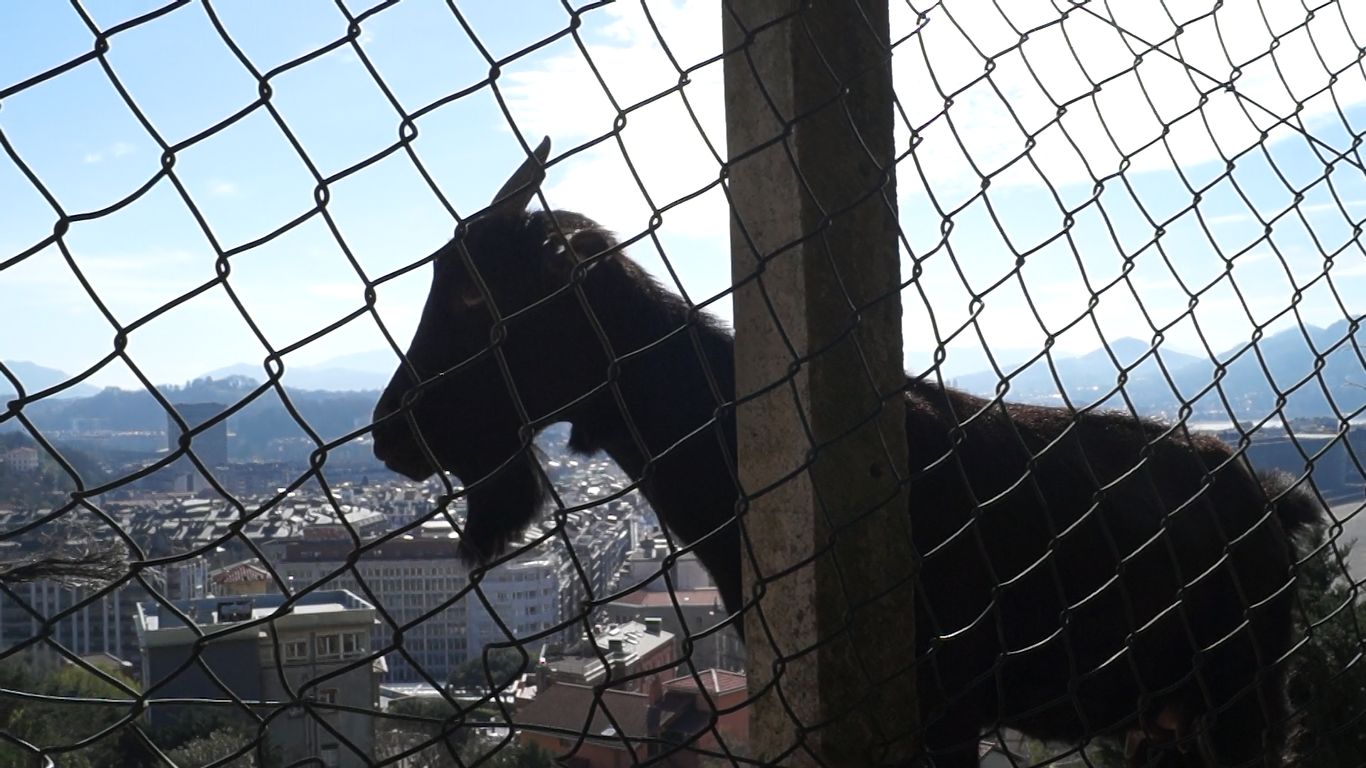
The urban side of the city ends abruptly – the dense tumult of the promenade is discontinued as a wide, rather drab road, with a petrol station emphasizing the industrial look, distinctly takes over. Then a few stair steps and the striking polish is left behind – the marble sidewalks are replaced by simple asphalt and the way up Monte Ulía begins. The cover used to be cobblestones, I imagine, remembering the sudden ascent of the street leading up to the Tomb of Gül Baba in Budapest. A mausoleum with a view, it takes a steep walk up one of the city’s tightest alleys to reach the tomb – a walk made enchanting and mythic by the unruly cobblestones that so harshly varied from everything around it. Because the tasteless visionaries of Budapest equate renovation with limitless block paving, the street, as well as the once wildly romantic tomb, almost fade into the environment – fortunately no municipal government can alter the unlikely incline. The slightly sloven aura of Monte Ulía’s borders is defined by the precipitous croft, lying parallelly to the road – it’s an anarchic animal farm, worthy of the literary connotation, given how one cannot see any signs of human maintenance. The anarchy only extends to how it looks: the fences, the bushes and the remainders of a shed are completely exposed to the ardent spirit of the inhabiting chickens, goats and horses. The political order, on the contrary, is kept well in hand by a black, one-eyed goat who rigorously warrants the oppression of his fellow animals. Although truly a commanding presence, he also personifies the inherent unsustainability of megalomania – he regularly misses out on some great pieces of cabbage given to him, being too busy to prevent others from receiving their share. Of course, the leader is often away from the fences to gather a comprehensive view of his land – that’s the occasion to observe peaceful family life.
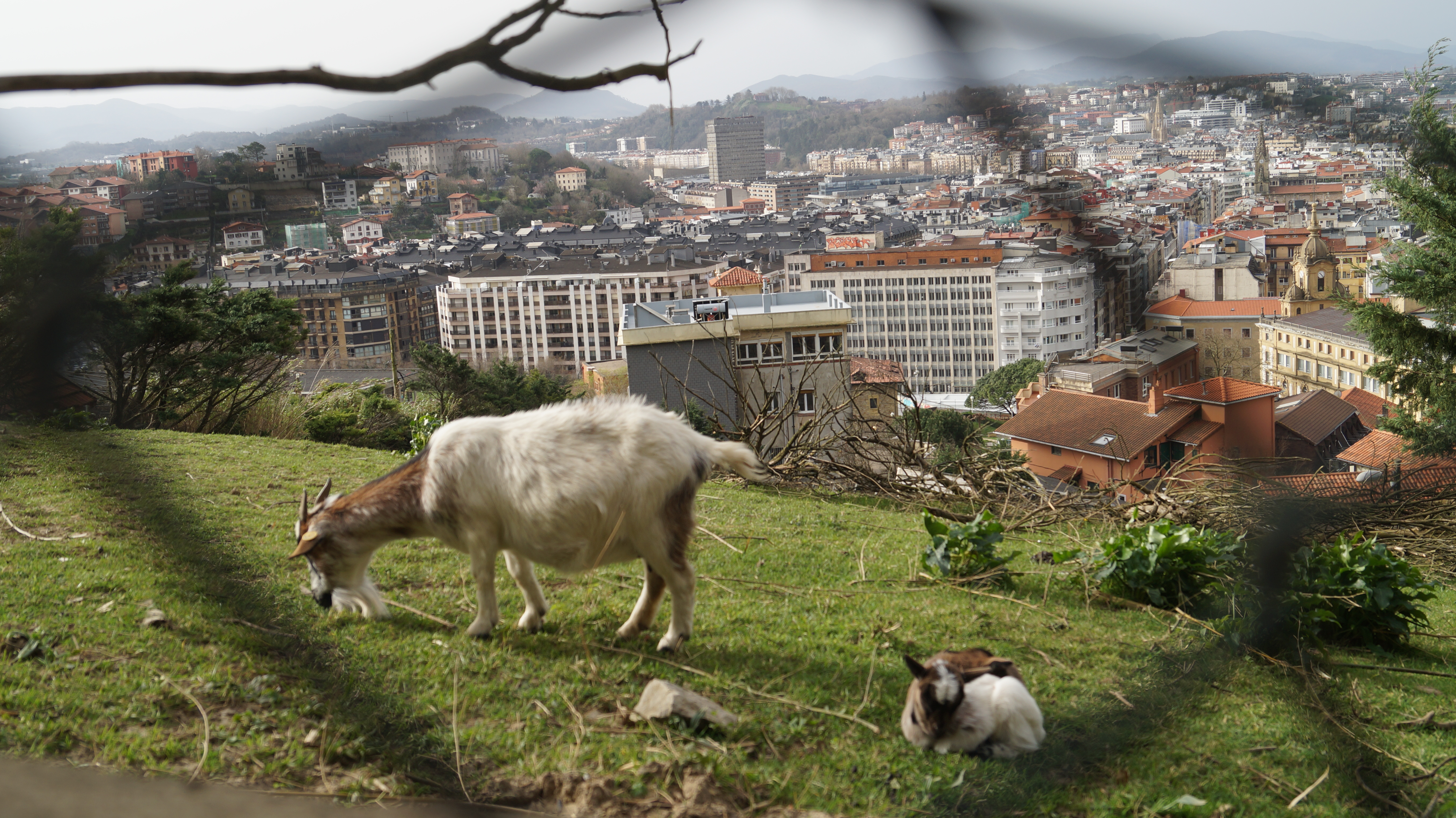
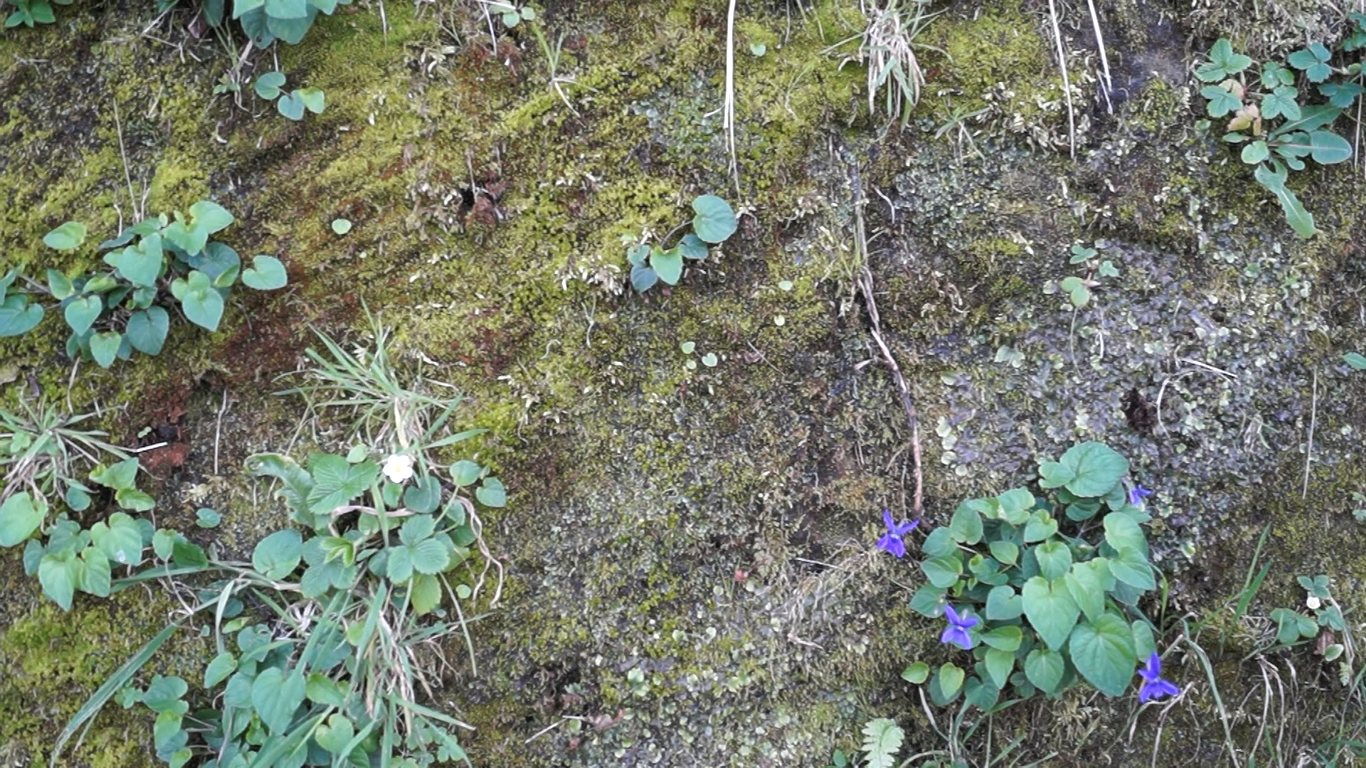
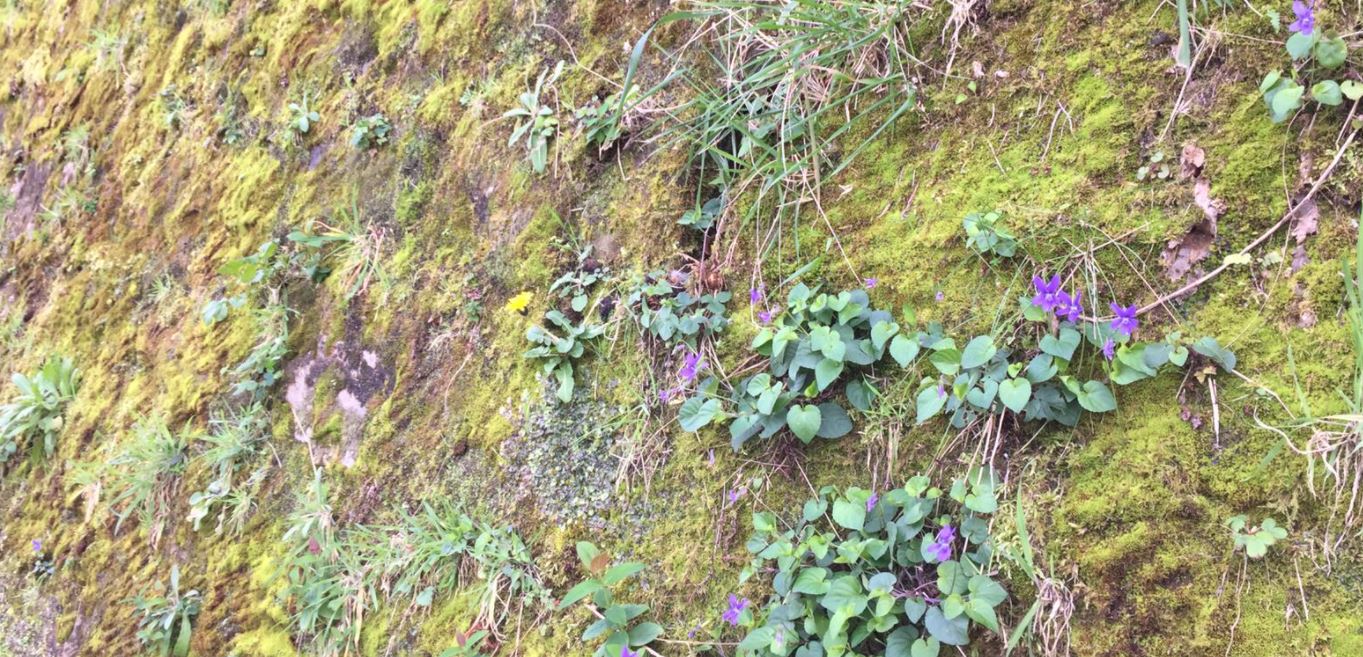
Manifold eclectic impressions mark my overall image of the Basque Country. Sunlight, crystalline blue and white, then fog and grayish greens, impudent palm trees and severe pines, hot sand in the wind and the immobile starkness of rocks. The large-scale, distant awe of panoramas (such as the one opening up right after the goats), and the reductive beauty of various surfaces up close, with intricate, ever-changing details. Passing by the first lookout to the ocean, the opposite kind of spectacle emerges. A stone wall covered in moss and flowers, lusterless and earthy, nonetheless displays a remarkably broad spectrum of colors. Looking away from the unattainable magnitude of the ocean, one can turn to the stonewall to regard and touch something more fathomable.
photos by Anna Babos