

In the flicker of silhouettes, light filters in. Rooms charge and change, the trails of people lingering in the back of history and memory. What does is take to put the once swaying world back in motion? Clarity, as that of George Oppen, seeks its own ground, metamorphosing a child’s foot into a butterfly because it is what needs to be done. In Sílvia das Fadas› Square Dance, Los Angeles County, California, 2013, the discarded photographs of Russell Lee are called back as well as called forward in a fulgent dance of figures, shadows, and light. Luminousness needs to be restored and reinvented, the sources of opalescence cannot always remain the same: those who have sought will belong to a “we,” an overcoming, ardent “we” wielded by hands in which the power of lives is contained. A chorus of imagined futures joins those of reverberative pasts. Legs and arms shift and travel as leaves and shades, trees and shrouds, traces upon traces. There is a story to be told in possible dances.
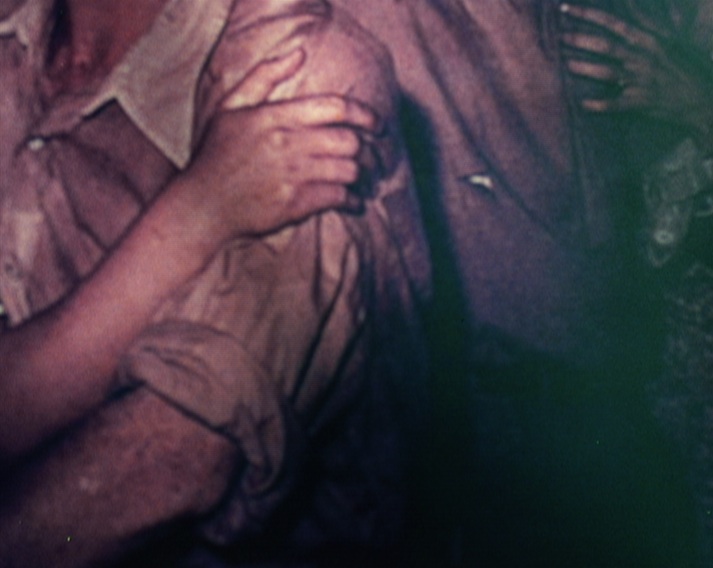
Doubly exposed to time, laid open to possible world sightings from both ends, through echoing with “Which side are you on?,” these windows of chance glimpses at people in rural America during the Great Depression join imagined pasts with graceful futures. Their grace is not without strife, for the filigree waves of their bodies and clothes, the contours of the room and the lines of their faces are reflected in a prism of multifariousness. Where they are going, there is no end, no callous lingering, not even a whisper of delineation or definition. Instead, it is clarity that rings true in revisiting places where people are handheld, whether by camera or song, by cinema or light. Sílvia das Fadas is familiar with these lands, as her intimacy with the recovery of once living relationships reveals in strokes of seeping light. Memory burns bright, with details as its sacred fireflies. Corners of the once inhabited brush against the newly arrived. Remnants of the once seen bloom in the gaze born anew. There is no way to hide, nor is there any reason to: we are all the richer, all the closer, all the more saturated with each other in taking up the threads and vestiges of other golden tales, following their courses whether they be rivers, mountains or sands buried underneath the cities.
Awakening has need of shipwrecks – in brushing the quotidian from the soles of our feet, we teeter on the edge of forgetfulness. Remembering is a choice more than it ever was, but its walls and hedges are no less slippery. Shadows dance in the realms of the forlorn as much as in those of the hopeful, but the thread to follow, glowing in the darkness in-between, is woven from the urge and yearning for the filtering light, the light that made cinema and that breaks and reflects the world.