
There’s a butterfly winging into the image in Vittorio De Sica’s La ciociara as Jean-Paul Belmondo and Sophia Loren are hiding behind the stone wall of a bridge. A German sidecar is racing towards them on the road, but they promptly fade into the shadow of the barrier. The butterfly doesn’t take the risk, it quickly changes direction and drifts away before the car appears. The butterfly doesn’t share the image with the military vehicle. A tender, heart-warming coincidence, coming and going with the wind, a coincidence that can only happen in cinema. Later, Belmondo and Loren get lucky again and survive a bombing; this time, the camera intentionally catches a ladybug climbing through the grass. The tranquillity of insects only draws our attention for brief seconds: the film is loud, robust and hopeless, depicting the last years of World War II in Italy through the story of a widowed mother, Cesira – played by the high-spirited and constantly grimacing Loren – and her daughter, Rosetta, who try to find shelter in Cesira’s native village after the bombing of Rome.
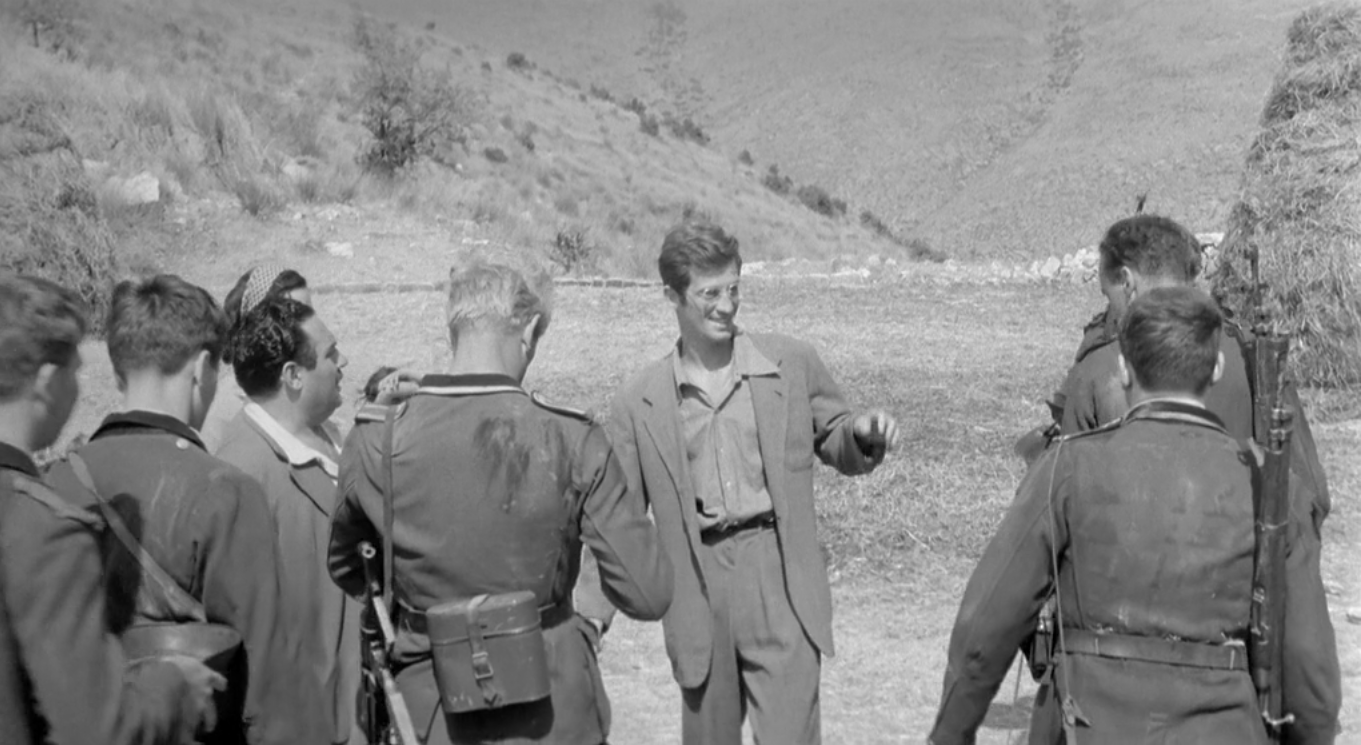
There, they meet Michele, a young man characterized by his burning faith in literature and the peasantry, his reverence for sincerity and the Bible and his unrelenting criticism of both his own community and the world he would never see. His dignity and moral concerns are not taken seriously by his environment, which regards his youthful temperament with impatience. His eyesight is so weak that when he accidentally sees Rosetta naked, Cesira comforts her daughter by saying that Michele can barely see anyway. He is played by Belmondo, who hadn’t interiorized his persona yet and was able to nuance Michele’s explosive, insecure and profusely kind movements and gestures. He stands with his back to Cesira, whom he secretly adores and looks far away while contemplating his past vocation of becoming a priest. Maybe it was indeed my vocation and that’s why I shouldn’t do it, Michelle adds. He is anxiously crumpling Rosetta’s history book that he took from her to make a speech about the ignorance of schools. When Cesira asks him about girls, he gets uncomfortable and painfully giggles. Two fascists turn up, they tell Michele about the arrest of Mussolini and threaten to kill him. He only smiles at them, standing in a truly priest-like posture. If it’s true, I can die happy. When a group of German soldiers take him to show them the quickest way through the mountains he also smiles. Everyone around him seems to understand what will follow.
Michele is neither a holy fool, nor a consequent ideologist. In his hasty arguments, overt generosity, his prudent reading from the Bible, his clumsy romantic attempts and faraway moments of staring at flowers and ladybugs, Michele incorporates that transitional state between a child and an adult, between self-imposed austerity and the desire to live. He doesn’t know when to change directions as routinely as the butterfly, but they’re similar in their delicacy.
Jean-Paul Belmondo became a little too cool, virile and muscular for Michele over the decades. Yet, with different motivations and in different clothes, he kept looking for the truth in idiosyncratic ways; he was even a priest once. The innocent smile had also altered over time but he continued to preserve his pride whenever he would walk towards death again.