

“A film consists of frames. The continuity of movement is fragmented to phase images. This set of images can be treated as an assortment of elements, which can be used in as many orders as many times as we please.” (Háy Ágnes: A filmidő grafikus ábrázolása)
A bus stop is a place for waiting, offering a chance to rest amidst the accelerating pace of life, a chance to observe details, other passengers, or it might be used as an excuse to do nothing for a while. The nature of the situation makes one completely conscious of time. One might be standing, sitting or walking around, or in some cases paying an exclusive attention to time. When arriving at the bus stop, the passenger might already know the exact time of departure, or speculate the duration of the wait. Whether carrying shopping bags, talking to an acquaintance, reading the newspaper or checking the phone at the bus stop, our thoughts are constantly revolving around the passage of time.
Várakozás, a short film by the Hungarian artist, Háy Ágnes, analyses filmic time through the notion of waiting in a bus stop. The film starts with a quick sequence of still close-ups of the place, which, by following the flight line of a bird, seems to indicate the phases of movement. At the same time, the images gradually shape our sense of space. One figure appears in several stills, almost at the same position but with different backgrounds. A bird flies by and other passengers and cars cross the picture. Then, more people appear, as if the stills created a catalogue of the people in the bus stop.
I don’t remember every time I’ve spent in bus stops. But I can recall several stations, where I was a regular visitor. I remember some tufts on the ground, touching the leaves I tore off a certain bush, the break on the concrete in which the rain stopped. And I also remember some people I travelled with, striking fellows, problematic ones, some I found familiar and another who stared at me.
After the titles, everything changes in the film. Instead of close-ups we finally see the whole bus stop, and from this perspective, life can be seen in quickened images in motion. Noticing a sharp difference might strike one as funny, I certainly smiled seeing this abrupt change. After that, the game begins; I tried to find everyone from the stills in the moving image. While watching the several layers of the image, a swing appears in the background, people walking on the other side of the road, the motion is slowing down gradually and I feel a vague confusion. It takes me a while to realize that the image has started to narrow down, to match the size of the bus. I smile again. Music, composed by Vidovszky László, also contributes to this effect on me, as the metronome-like sound pace accelerates with the bus, which slowly comes into view, and the music becomes a solemn anthem of its arrival. The bus rolls in slow motion, finally stops, and before opening its doors, the image freezes again. The last still, almost one minute long, clearly separates the experience of waiting from the experience of watching people waiting for the bus.
“Basic idea: At the beginning of waiting the perception of time is quick, then it starts to slow down, eventually until it becomes unbearable.” (Háy Ágnes: A filmidő grafikus ábrázolása)
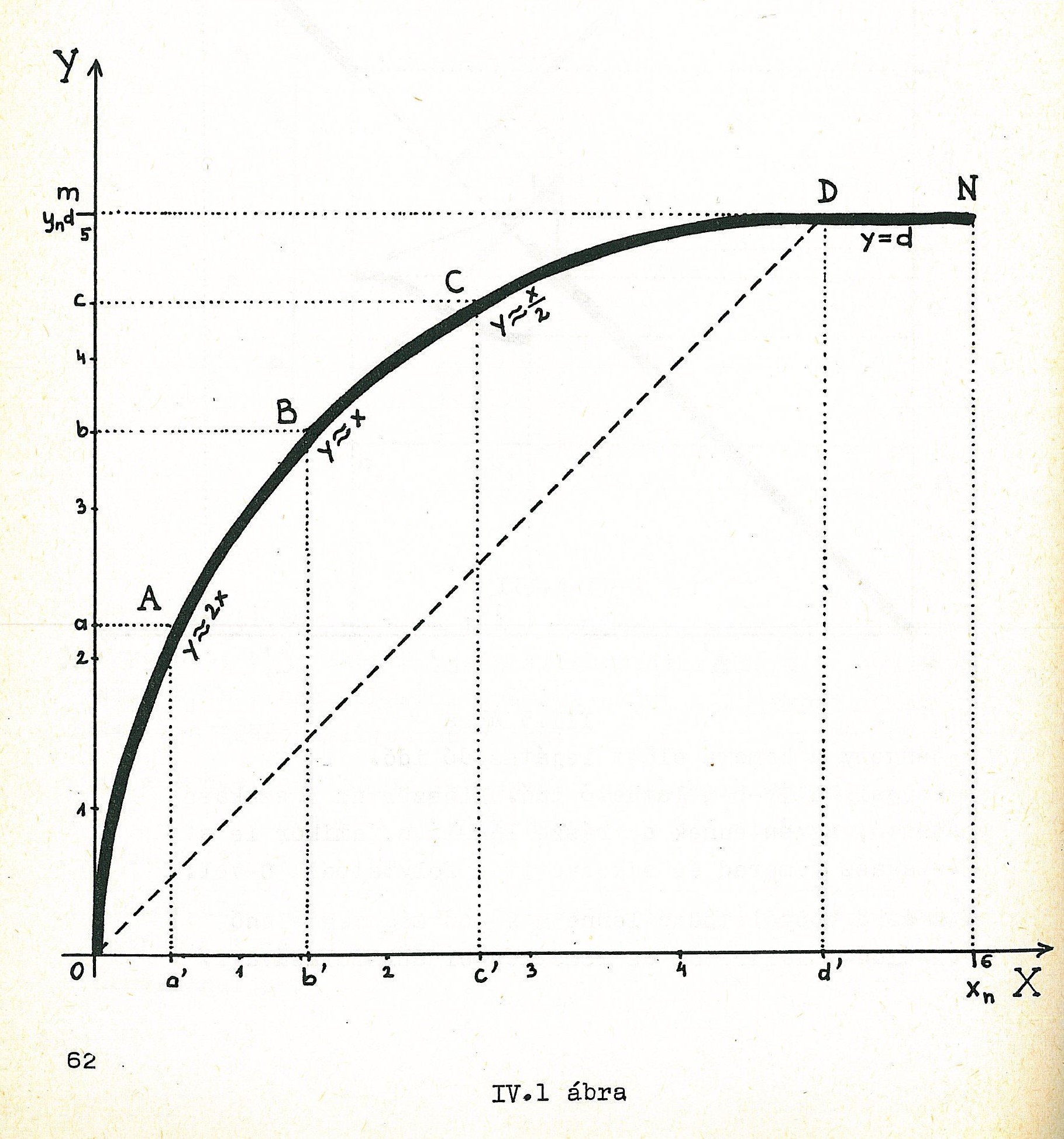
Háy Ágnes: Graph for Várakozás.
http://catalog.c3.hu/index.php?page=work&id=783&lang=HU
Háy Ágnes: A filmidő grafikus ábrázolása. (Graphic Illustration of Time in Film) In: Mozgó Képek. Mozgó Film. No. 1. BBS, 1984. (translation of the excerpts by Babos Anna)