

JAMES WATERS:

“It’s like this. You see I’ve been a minister for a long time. I like it. I’ve been at this church and this church is very good. In fact, the people are very warm to me and they love me very much, which is very good. Because what that pulls out of me, is [also] what gives them something, pulling something out of them also.”
Rev. Luther Williams from Bill Gunn’s Ganja and Hess
The film begins and ends with the Rev. Williams (Sam Waymon, also the film’s composer). He narrates the film’s opening minutes, delineating his vocation as an inner-NYC minister from his profession as Dr. Hess Green’s chauffeur (Dr. Hess played by Duane Jones). Rev. Williams describes his employer as a victim, not a criminal – much in the way he impartially delineates his own employment/vocation dichotomy. Bookending the film, he ordains it with an aura of forgiveness that eludes Hess for the film’s interceding runtime.
Dr. Hess Green’s vocation is as an anthropologist, specialising in studies of the Myrthians, comprising an ancient African tribe of vampires/cannibals. Having been stabbed and cursed by one of their relics – a dagger at the hand of his academic protégé, George Meda (played by Gunn himself) – Hess drinks the blood of the inner-city underclass, trawling bars for prostitutes and vagrants who live day-to-day, fodder for Hess’ own, eternal bloodlust. Unlike Rev. Williams, Hess experiences no spiritual guidance and transacts from his community to feed a curse, one that plunges him deeper into his immortal self, away from death and – additionally – any kind of spiritual awakening.
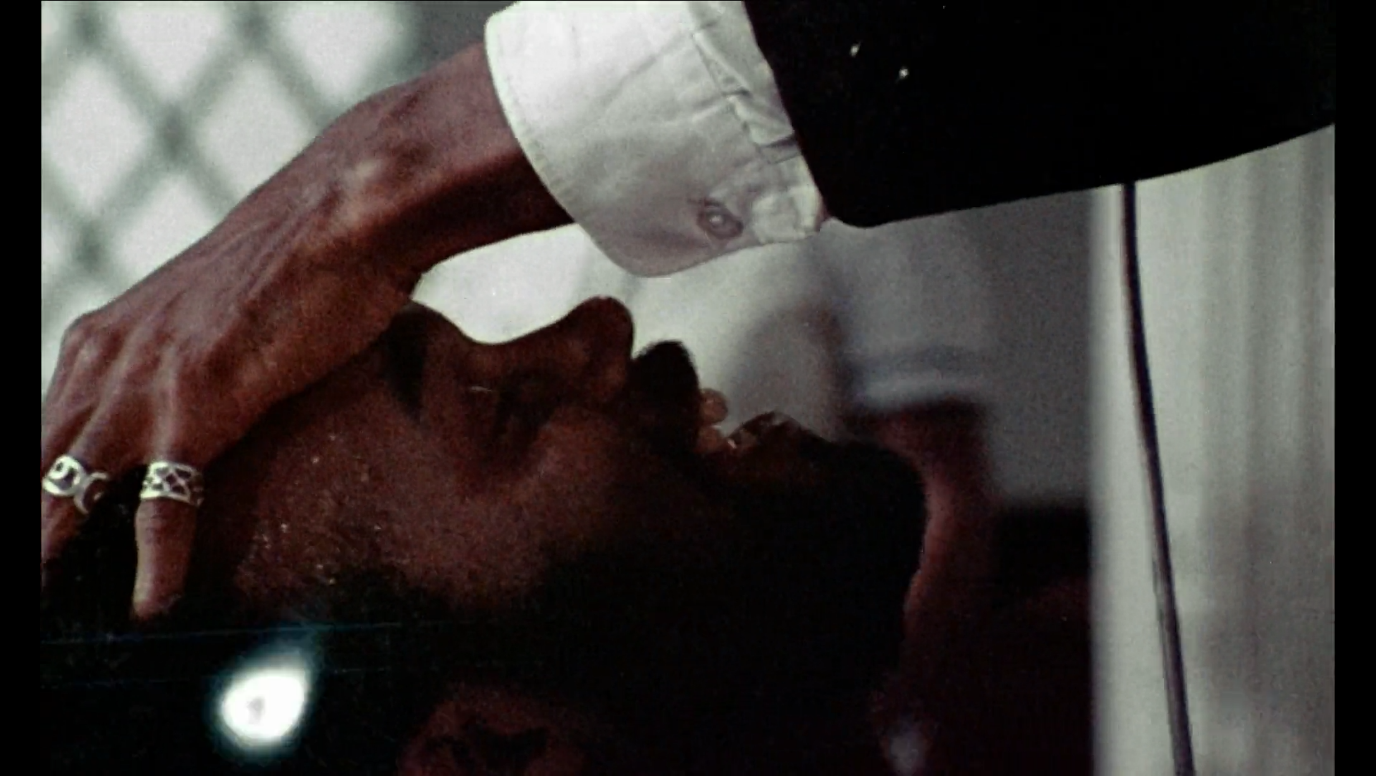
Riddled with guilt, Hess goes to the church where his chauffeur ordains; a church within one of the communities Hess used to scout for warm bodies. This scene at church lasts upwards of 10 minutes and its energy is one of exultance. Rev. Williams’ forgiveness is cast along the entire church. He dances and wails into a microphone, dripping with sweat. One gets the impression that Williams was waiting for his employer to join his parishioners and return to the fold, planting the initial seed with an opening narration that hangs over both Hess and the film. Until this point, Waymon’s score was a non-diegetic ringing of the church’s opening sounds, with manipulated tape loops of choral voices echoing through the mental and physical spaces Hess inhabits throughout. But in this final scene it’s a return to the film’s opening aural diegesis and verité-aesthetic (a form likely dictated by the fact that it was filmed at an actual church with its parishioners, emphasised by the visible tungsten lights, snap zooms and multiple cameras shooting).
There’s an ecstasy in Hess’ absolution. He’s the only one to step up for forgiveness in the church, shuddering under Williams’ hand and rising up in tears. Returning home, he finds a makeshift cross hanging from a string and shot through with the glow of a lightbulb. Stepping under the cross’ shadow, Hess can finally partake in a death that serves a greater purpose; a life (his own) that he gives, instead of one that he takes.
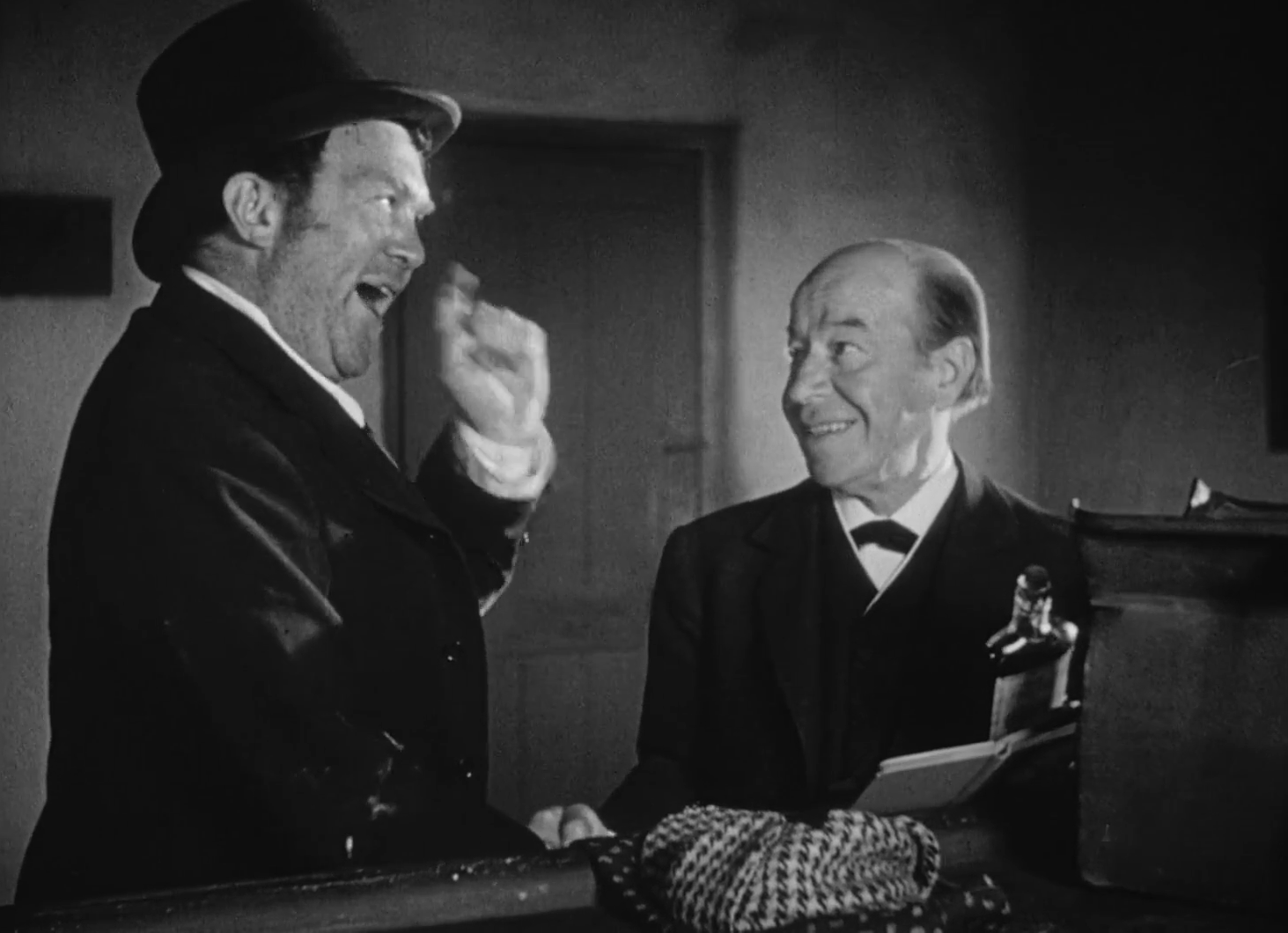
SIMON WIENER: Wenn ich an Geistliche im Kino denke, kommt mir gleich meine Lieblingsfigur aus Stagecoach in den Sinn: Peacock, gespielt von Donald Meek. Peacock wird von anderen zwar stets als “reverend” bezeichnet, ist aber keineswegs Priester, sondern Whiskeyverkäufer. Tatsächlich kann man den unscheinbaren Peacock in jeder Hinsicht als Gegenteil dessen sehen, was ein Priester verkörpern sollte. Er hat keinerlei natürliche Autorität, keinerlei Einfluss über seine Mitmenschen, kann sich nie Gehör verschaffen. Seinen Namen kann sich niemand merken. Wenn er spricht, muss er sich zuvor räuspern, stottert dann unsicher, verspricht sich; seine Meinung wird aber ohnehin übergangen. Angesichts drohender Gefahr bleibt er nicht etwa ruhig, gibt keine besänftigenden Worte von sich, möchte ihr nicht gegenübertreten, sondern nur wieder zurück nach Hause. Peacock steht in vielen Einstellungen nur im Hintergrund herum. Eine der vielen Vergnügen, die der Film bereiten kann, besteht darin, seine Reaktionen zu beobachten. Das nervöse Klappern seiner Finger; die Aura des sich-Peinlichseins, die ihn beständig umgibt; seine Mimik, die wie ein Seismograph Handlungen der anderen aufzeichnet, vergrößert, kenntlich macht. Alles scheint ihn zu erschüttern; vor lauter Erschütterung ist ihm jegliche eigene Handlungsfähigkeit genommen. Zittriges Lächeln, unangenehme Betroffenheit. Peacock ist selbst fürs Ängstlichsein zu ängstlich. Dennoch versteht man, dass die anderen ihn für einen Priester halten. Sein Gebaren und seine Kleidung geben ihm trotz dem oben Aufgeführtem etwas Feierliches, Würdevolles, Ernstliches, ebenso die Aufmerksamkeit, mit der er zuhört.
SIMON PETRI: The distinctive characteristic of the priests I observe lies in their inseparable reticence and ostentation. They’re blue-eyed, frail and thin, bearing witness to the education that kept them from wind and sunburn and didn’t teach them how to land on their feet. At the same time, they’re theatrical and vain, finding fulfillment in speech acts and performances. They take pride in their sonorous baritone on the distant heights of the pulpit, but they turn quiet when rude practicalities approach them up close and indiscreetly.
Karpo Godina’s Zdravi Ljudi Za Razonodu approaches from up close and is indiscreet. It’s a film of simultaneous dimensions itself: a pictorial, ethnographic snapshot of centuries-long multi-ethnic coexistence in Vojvodina, which makes the inhabitants jubilantly sing about the people of the area. Yet, it’s also a prism that reflects the artificiality of exoticizing ethnographic films with rich irony through the mistrustful half-smile of the performers, who find the paean for the neighboring ethnicity both merited and absurd. There is mischief in the exquisite images: if it’s not the locals› prankish spirit, the director tilts the landscape’s pastoral beauty with a modern rock song.
The first priest in the film – out of the five it features – subtly radiates the described ambiguity. He talks about a receipt, chanting words like “pumpkin”, “cottage cheese” or “apple” on a high-pitched, transfigured tone. He constantly looks away from the camera, showing his irritation, questioning why he is asked to do this in the first place. Then he suddenly reappears, posing in two different costumes, wearing the weight of glamorous silk and velvet with the utmost personal honour, preceding the excess of the ecclesiastical fashion show in Federico Fellini’s Roma.
But that look remains, wishing to be left alone by the bothersome crew.

DAVID PERRIN: Es ist schwierig über jemanden zu schreiben – in diesem Fall einen Priester – vor dem man im wirklichen Alltag wenig Achtung empfinden kann. Es fehlt nicht nur die Sprache, sondern die Bilder überhaupt. Da kann das Kino helfen: Eine Figur zu vermenschlichen, ihr einen Glanz zu schenken, den sie in der Wirklichkeit selten hat. (Oder besser gesagt, die ich persönlich nie erlebt habe – darauf kommt es ja immerhin an) Zum Beispiel die Figur des Don Pietro Pelligrini, der Priester in Rosselinis Roma città aperta. Ein Widerstandskämpfer gegen die Nazis, der am Ende des Films von den Faschisten an einem Stuhl unter freiem Himmel gebunden und von einem deutschen Offizier durch einen Kopfschuss von hinten hingerichtet wird. Im Moment vor seinem Tode blickt er mit seinen ermüdeten Augen in dem Himmel, dann kommt der Knall: Der Tod eines Helden.
Oft, um eine für mich unsympathische Person oder Figur in etwas Liebenswürdiges zu verwandeln, habe ich mir immer vorgestellt, wie diese Person einen alltäglichen Vorgang verrichtet, wie zum Beispiel eine Katze füttert, ein Auto fährt, den Abwasch erledigt oder im Schlaf spricht.
„Wie gern der Priester Auto fuhr, und wie schnell, vor allem in dieser weiten, ziemlich leeren Grenzlandebene, wo er damals in seiner Verlobungszeit sogar bei einem Amateurrennen mitgemacht hatte, auf dem Volkswagen großaufgemalt die gleiche Nummer wie dann die für die Wäsche im Spätberufenen-Internat.“ (Peter Handke, Mein Jahr in der Niemandsbucht, S. 375)
Gerne würde ich einen Film sehen, in dem ein Priester während des gesamten Films nur durch eine Landschaft fährt, von frühmorgens bis spätnachts, wie er danach sich in seiner bescheidenen Wohnung, die sich am Rande einer Kleinstadt befindet, zurückzieht, seine Katze füttert, sein Abendessen kocht, danach eigenhändig das Geschirr abspült und schließlich vor dem Fernsehen einschläft, unheimliche Satz-Fragmente in sich hineinmurmelnd. Aber diesen Film gibt es (noch) nicht. Er müsste erst gemacht werden.
ANNA BABOS: A sickly, troubled woman arrives in a pink room for confession. On the wall is a picture of the heart of Christ, the priest is seated next to a cross. Instead of penance, he gives her a needle to prick herself with until she comes closer to the truth. Then, while lying in a hospital bed, the woman keeps the needle with her, under the blanket, pressed tightly to her breast. A visitor arrives and, while patting her kindly, accidentally presses the needle into the woman’s heart.
In Kutya éji dala, the director, Bódy Gábor plays the role of a pseudo-priest, a gesture that is usually understood as a self-confession, referring to his role as an informer in the Hungarian socialist Kádár régime. Although this interpretation seems rather obvious, it would be a pity to simplify his character to a biographical element. It opens up new ways to think about his conscious and narcissistic artistic position, but the pseudo-priest can also be approached as the essence of the Hungarian underground scene of the eighties. Together with other characters, Bódy represents a narrow, unique and outsider stratum, both in thought and humour, which, in addition to its unconcerned criticism of the system and society, looks at people with interest and is open to romantic sentimentalism.
Bódy appears as an eccentric pseudo-priest, who is out of place, doesn’t know the tools, but wants to work for and with the community. In the end, in a truly priest-like combination, there is warmth behind his egomaniac introspection.
SEBASTIAN BOBIK:

I will never forget seeing Strasti po Andreyu for the first time. It was on a small laptop in Russia, where I had been gifted the DVD by a gracious family who knew about my interest in cinema. It was on a cold winter evening that I decided to give the film a try. My friends had gone out to drink, while I had remained at home and sat in complete silence and amazement for three hours. I had never seen anything like it. From the opening, seemingly mythical hot air balloon flight, to the four horses standing in the rain at the end, I was stunned by this overwhelmingly physical and spiritual experience. I remember once recounting this experience and jokingly saying: “Whenever I watch Tarkovsky, I believe in God”. The image is the trinity (in Russian: Троица, pronounced Troitsa) by Andrei Rublev, the Russian icon painter, who was immortalized in cinema by the Russian filmmaker Andrei Tarkovsky. Andrei makes a film about Andrei. In it, he reckons with the struggles of being an artist and being a man of faith, by showing us a man who is also both. For Tarkovsky this trinity by Rublev represented everything he wanted to tell in this film. It takes place in the 15th century, a time of chaos, violence and murder. The film makes sure to show us these acts of violence on several occasions. At this time, the painter Andrei Rublev was commissioned to create a work of art to honour Saint Sergeius of Radonezh. After leaving the sheltered walls of his monastery, Rublev was confronted with the chaos and frightening state of the world around him. In response to this his Trinity was made, to embody the values of spiritual unity, of love, fraternity and humility. In the film we are thrown for three hours into the uncertainty and suffering of this world. At the end of these dizzying and overwhelming wanderings through this world, the images, which had been black & white, suddenly turn into glorious color. A choir sings as we see finally the works of Andrei Rublev. His paintings are filmed in a combination of zooms and pans by Tarkovsky. And there among these works we also find his most famous work, this trinity, which is often seen as the greatest of all Russian icons.
ANDREW CHRISTOPHER GREEN: Kierkegaard thought that we cannot be true to anything if we don’t experience doubt. Doubt doesn’t signify a lack but a beginning. It’s a curious paradox. “A person laments that he has lost his faith, and when a check is made to see where he is on the scale, curiously enough, he has only reached the point where he is to make the infinite movement of resignation.” If Abraham hadn’t thought he was really going to sacrifice Isaac, if he knew God would provide him with a ram, if he didn’t doubt God, then he wouldn’t have had faith, and he wouldn’t have been a great man. The meek, unassuming pastor in Bresson’s Journal d’un curé de campagne practices his faith humbly in a fallen world. He is very ill and tends to his dwindling congregation despite their lack of devotion. The priest assumes this all to be a test of his faith. He gets sicker and sicker until he faces death with a conviction that borders on delusion. But we don’t question the authenticity of his faith, and he’s not at all a simple-minded person. He sees all the ugliness and cruelty of the world with sober eyes. I’ve been told its very hard to make films now, without any political or moral convictions, without hope. Those commitments have become a thing of the past, and we can’t work in the good old days but have to face the bad new ones. I think this is why Bresson’s Priest has always seemed so heroic to me. He holds fast to his beliefs amidst a social breakdown not as an escape from his suffering but out of a love of the world that could be. “The only philosophy that can be practiced responsibly in the face of despair is the attempt to contemplate all things as they would present themselves from the standpoint of redemption.”
RONNY GÜNL: Männer gedrängt in engen Reihen. Gesenkte Blicke, gehüllt in lange Talare. Die Konturen ihrer Körper verschwinden hinter den faltenlosen Stoffen. Reglos verharren sie an ihren zugewiesenen Plätzen. Ein raunendes Murmeln erschwert die stickige Luft. Kratzende Federn auf leerem Papier. Augen gezeichnet von frommer Demut und unterdrücktem Begehren. Eine winzige Handbewegung tritt aus dem Schatten heraus. Sie dirigiert das Geschehen.

Verschwiegen durchkreuzen Blickachsen den Raum. Perspektiven verschieben sich. Jede Richtung ist ein Bekenntnis, das sein Geheimnis verbirgt. Ein Loch in der Wand erscheint. Die aufgerissenen Augen dahinter kennen keinen Namen. Vor ihnen die Offenbarung, im Dunkeln das Unbekannte. Ein Augenblick erfüllt von Unbehagen und Neugier zugleich. Begrenzt vom Ausschnitt verliert sich das Bild im Taumel der Einbildungskraft.

Ergeben richtet sich der Kopf zum Himmel. Die Begegnung scheint den Widersinn aufzuheben. Es bleibt ein verzweifelter Rest. Robert Bressons Procès de Jeanne d’Arc lässt zwischen den Bildern keinen Platz für spekulative Erhabenheit. Stattdessen der Versuch, sich dem Schatten des Schicksals zu entledigen. Ängstliches Sehen hält entgegen daran fest.
