

Wenn man einen Film von Freunden oder Bekannten sieht, dann ist man meist voreingenommen. Man ist entweder besonders kritisch, weil man das Werk nicht ernst nimmt und schon gar nicht losgelöst von der jeweiligen Person betrachten kann, weil sich Neid in einem entwickelt, oder man eine Person einfach nicht in einer bestimmten Rolle anerkennen will, oder man ist besonders gutmütig, lässt sich leicht überraschen und nimmt Dinge stärker oder intensiver wahr, die eigentlich gar nicht da sind. Im Fall von Urban Escape von David de Rueda und Mélanie de Groot van Embden konnte ich mich davon relativ gut lösen. Ich kenne Mélanie nicht besonders gut, wir haben uns bei einem Workshop in Cannes 2013 kennengelernt und seitdem hatten wir nur spärlich über Social Media Kanäle Kontakt. Dennoch vermochte ich das, was ich von ihr in Erinnerung hatte, sofort im Film zu erkennen: Eine Umarmung des Lebens und ein Streben nach Freiheit in Verbindung mit einer Neugier für die Welt.
Der Film, den sie zusammen mit dem Begründer von urbex.fr, David de Rueda als einen Roadtrip in die Freiheit organisierte, taucht in die Welt der Urban Exploration in den Vereinigten Staaten ein. Der Film begleitet Größen der Szene in leer stehende Gebäude, auf illegalen Trips immer mit dem Blick über die Schulter, zwischen der Schönheit einer Einsamkeit und dem Adrenalindruck einer Verfolgungsjagd. Es ist ein Stück Direct Cinema mit zeitgenössischem Anstrich und trotz einiger Schwächen, hat mich das Gefühl des Films in einer Art gepackt, die nichts mit meiner Bekanntschaft mit der Filmemacherin zu tun hat. Es gibt etwas in Urban Escape, das von einem Ort kommt, den jeder Filmemacher irgendwie sucht: Es ist eine Neugier für etwas Zeitgenössisches, das nicht unbedingt aus den reflektierten Filmemachern selbst kommt, sondern aus ihren Augen auf die Welt. Es geht um Jugend, Abenteuer und das Leben. Der Film liebt diese Dinge, ohne sie zu rechtfertigen.
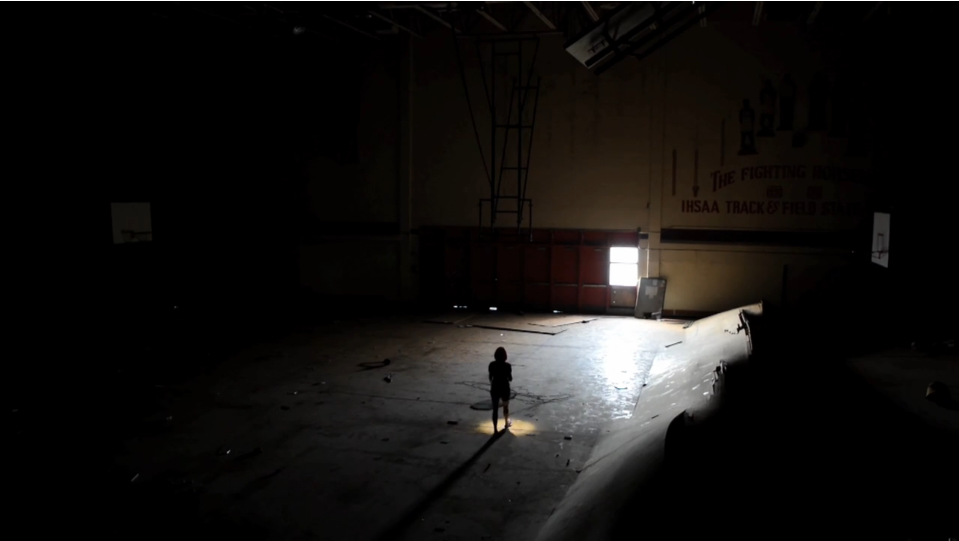
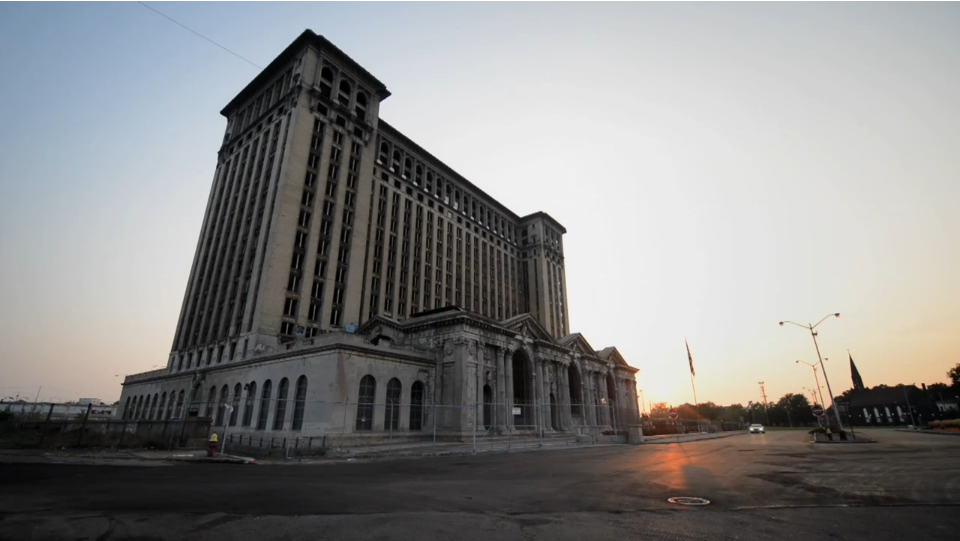
Durchgehend treffen Abstraktion und Spontanität aufeinander. Vor allem die spontanen Elemente sind äußerst gelungen. Dort finden sich poetische, spannende und humorvolle Augenblicke in einer sehr unbekannten, aber inspirierenden Welt, dem hippen Underground unserer Zeit. Die Kamera schafft es, die verlassene Schönheit und die Gefahr solcher Erkundungen einzufangen. Vor allem eine Szene an einem nie in Betrieb genommenen Kühlturm ist atemberaubend. Die verschiedenen Figuren von der Ost- bis zur Westküste der USA erzählen sich ganz ohne unnötige Expositionen und Erklärungen, indem der Film sie schlicht bei der Ausübung ihrer Leidenschaft begleitet und reden lässt. Nicht ganz so gelungen ist der abstrakte Teil des Films. In Übergängen wird eine Figur (Shindra) eingeführt, die in schön montierten Elektro-Sequenzen und begleitet von einer männlichen Voice-Over Stimme in kleinen poetischen Regungen vom Amerikanischen Traum, der Freiheit und der Einsamkeit erzählt. Die Schönheit der Landschaft wird hierbei jedoch von einer zu forcierten Montage entkräftet. Auch der romantische Vergleich urbaner Exploration mit einer Bonnie & Clyde artigen Bankräuber-Episode erschien mir nicht gerechtfertigt, da die Romantik nicht in einer Gewalt oder in einem Leben am Rand liegt, sondern in einer Einsamkeit des Lebens in der Mitte von uns, einem Eskapismus, für den man nicht flieht, sondern ins Herz wandert, selbst wenn dieses Herz vergessen ist. Metaphorik ist eigentlich völlig fehl am Platz hier, weil das Gefühl einer Freiheit sich ganz allein in der Direktheit und dem Rausch des Erlebens vermittelt. Urban Escape porträtiert eine Lebensweise und macht einen selbst zum Teil von dieser.
Es war mir eine große Freude, mich mit Mélanie über ihren Film zu unterhalten. Wir haben über Exploration, unabhängiges Filmemachen, die USA und die Stärken und Schwächen ihres Filmdebüts gesprochen.
Patrick: I want to start this by asking you a simple question with a maybe not so simple answer. Why did you choose the USA as a topic for your film?
Mélanie: There are many different explanations. But it was the idea of my co-director David at first. It is a road trip movie and we were fascinated by that country. And in terms of exploration it gives you all you can possibly ask for. All this different kinds of buildings and landscapes…in terms of imagery you have the desert, you have big cities, old cinemas, theaters, hospitals. We wouldn’t have had all that elsewhere. And we were attracted by the Dream, you know, the American Dream. Our destination was never discussed actually. It was always pretty obvious to shoot in the USA.
Patrick: When I was watching your film I had two feelings beating in my heart concerning your approach to America. There was this feeling of freedom but there was also this destruction, maybe this is the wrong term, well, there were so many lost things, and there was something violent about it. How did you feel about your approach?
Mélanie: Of course, there are many paradoxes concerning the USA. It is also a question of mentality. You have everywhere those “No Trespassing” signs, everything is private property but on the other hand it is a state of freedom. And people are attracted by that. When you travel there, you can easily understand how the thought of freedom is anchored in their personality, in their minds and even their religion. But on the other hand nothing is really allowed, you are followed by cops everywhere. Those lost and demolished buildings are a perfect reflection of our society during the last 50 years. It is not only in the USA.
Patrick: You mentioned the cops and your film seems to be a little bit about paranoia. There is always the uncertainty of being followed, somebody shouts: The cops are here! But in the end the cops often do not show up. I just remember this one scene at the prison where there is an actual confrontation with a police officer. As I want to know something about your attitude towards your filmmaking, I want to ask you: Was being caught in the act by a cop something you would have wished for? There were always those cuts to police cars in the street after it almost happened but it never really happened.
Mélanie: That is a very good observation and you are the first one who made it. It really was a whish we’ve had. We wanted a cop scene in the movie. We really wanted it. In the beginning our idea of the film was more about the cat & mouse game between explorers and cops. But it all came out differently. Well, we had been arrested by police but we never had the chance to film it. We even had a GoPro camera in our car so that we would have been able to film our arrest, but in reality it all went too fast. I even had a remote control for the camera, but when we were arrested, we had to move out of the car immediately, we were not allowed to move whatsoever. So I couldn’t even grab the remote control. Once I tried and the cop yelled at me: Don’t move! And he almost pointed his gun at me. But we were so desperate having such a scene. And we do have some but they are not very interesting. So we gave up on that. Just recently, I watched another documentary with a wonderful sheriff scene. And I was lucky because the director was there to talk about his film. I naturally asked him about the sheriff scene. And he told me that they met a sheriff and restaged the scene for the film. Otherwise it is just too unexpected to shoot. This is why we included the scene in the prison. But it is not essential.
Patrick: Is it very important to you to only have in your film what happens or happened in reality or would you stage anything for your next documentary?
Mélanie: I think it is important to find the right balance between construction and spontaneity. Most important to me is obviously the spontaneity of things. This is also why we never discussed previously what we were going to shoot. We just started following those guys and when something important happened I would ask David: Did you have it or didn’t you? And only then we would redo it. But all of it is just life, you know. No scene that ended up in the movie was shot twice. But those 52 minutes are only 20% of what we did. And I like the spontaneous aspects about it.
Patrick: How many cameras did you use and what kind of cameras?
Mélanie: We had two Nikon D800, one Nikon D600, we were shooting with both…and we had a very bad sound equipment. You noticed that. The sound editing is not very good. We just had one wireless Sennheiser microphone and when there were several protagonists in the frame we had to attach it to the most talkative person and tell them not to move too far away. David comes from photography, so naturally he is not very experienced with sound and he did not always wear his headphones, well, we didn’t pay too much attention. If we were redoing it we would think about a better solution for sound. But with exploration you cannot have any heavy instruments with you, you have to be flexible. It is difficult.
Patrick: How were the collaborative aspects for you? You have been two directors of this film. Were there any problems?
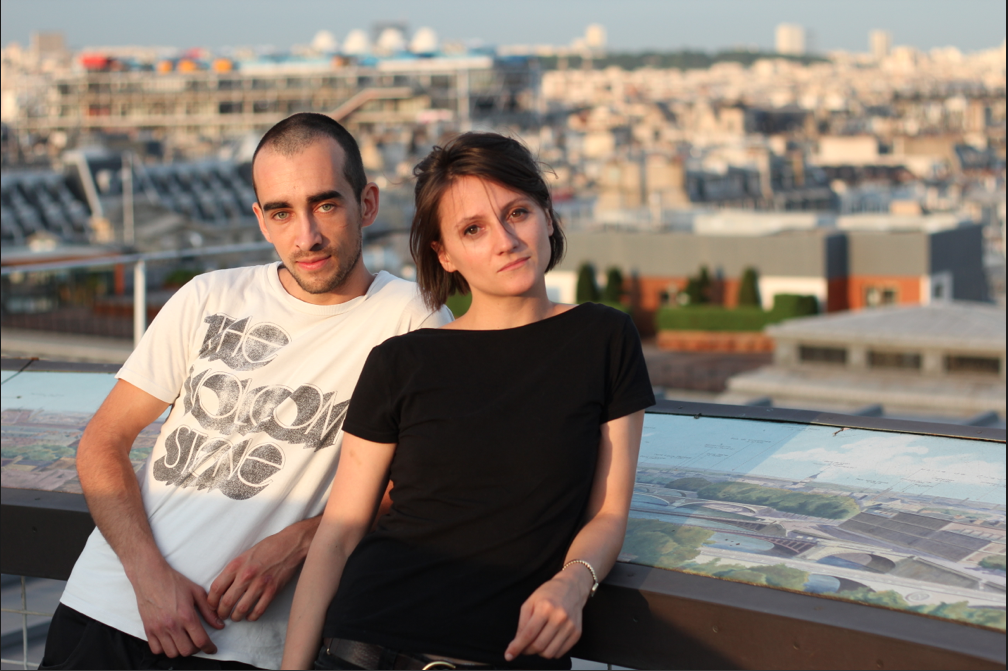
Mélanie: That was one of the first questions our producers asked us. Are you ready to work with each other? And we said: Yeah, sure. In the end it has been much more complicated than I have thought because we are very different from each other. But at the same time we worked very close and organic, because we have exactly the same perception of beauty. And we both have different skills. My part was more concerned with narration and interviews, the journalistic part, actually. I thought about how to talk about exploration, how to make those people comfortable and how to put all those little stories and sequences together. David was more concerned with the actual filming and the infiltration and scouting of the places. We were never fighting about what we should do or shouldn’t do. But my advice for people that want to co-direct would be to put everything on paper beforehand…make contracts and deals. At the moment we are preparing a second movie together and we put everything down. We have a script, a precise idea of what we’re gonna shoot. We won’t go randomly to the USA again in order to shoot whatever we may find. It has been very chaotic but in the end we were very fascinated and intrigued during the shooting and it was done in a very serious fashion. After all it could have been a Holiday movie. (laughs)
Patrick: How did you find those guys who go to these places?
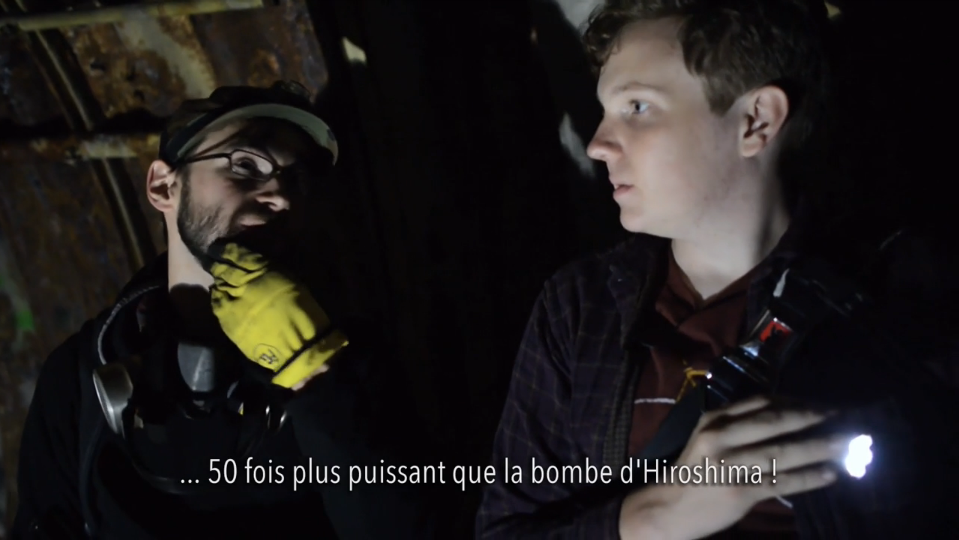
Mélanie: It has been pretty easy because those guys are fairly popular in the scene. They are very present online, they have their own websites, they have flickr accounts and instagram pages. So we would contact the ones we liked, where we liked the pictures and so on. Most of the time they were willing to speak to us. They liked David’s work. David created urbex.fr, he has many followers…and we were just two, which helped because they were very shy. Most of them were very surprised when we showed them the final film. They were really impressed. They just saw two young filmmakers, and even French one doing a piece.
Patrick: And you also worked on a BLOG were you wrote about your experiences while shooting, right?
Mélanie: Yes, I was writing a text every five days during our trip. Those texts were associated to selected pictures taken by David. And it was lots of fun doing this and it helped a lot. It was like a common theme. We got feedback, we created our world there. All the people following us… it was a huge support. Many people were really disappointed when they saw the final film, because the missed so many things, that were on the blog but didn’t make it into the movie. Especially the amusement park…people were very disappointed that it wasn’t in the movie…but it will be on DVD.
Patrick: In the director’s blog version…
Mélanie: Yeah.
Patrick: But I still didn’t get how it worked…you went there, you met those guys,..but when or how did you decide, for example, that it is time to go to the next city…where there any limits, any time tables, something like that?
Mélanie: We had three months. And in these three months we had over 100 places to visit. So we had our road map and day by day we would figure out what was worth seeing and what wasn’t worth seeing. Sometimes we would explore four buildings on one day and sometimes we would just ride in our car. Some things we couldn’t manage. But you know, three months is a very long time. So we weren’t really rushed. So, if we wanted to wait for the full moon to visit a building, we just waited. So we were really free thanks to this generous time management. Of course, we were also depending on the timetables of our protagonists.
Patrick: Was there any funding?
Mélanie: Yeah. We had everything paid for by our internet campaign. We had 10000 Euros and two funds from the region and subsidies from Nikon. And our production company paid for the remaining equipment. We didn’t spend too much many. All in all it cost approximately 20000 Euros. We could pay the cutter, we could pay the composer and we did not have to pay ourselves. So it was a cheap movie and we were very economical.
Patrick: One can see you exploring and climbing together with your protagonists in the film. Was there a sense of danger for you? I ask because most of the time you do a film you are kind of outside of it, it is more like a reflection of something you may or may have not lived. But in your case there is a very direct approach. Or to ask you in a more usual way: Were there moments in which you have been afraid?
Mélanie: I just realized it when I flew back to France. I arrived at the airport and suddenly I felt relieved. I realized that there was this weight on my heart all the time, almost like cramps. I was a bit worried that something might happen to us. You never know if you will get caught, or might have troubles. But while we were shooting, I was really enjoying myself. I was ready to do almost anything. I was very conscious that this was a once-in-lifetime experience and it was really amazing. And I still remember this time when we were so free…it was just living an adventure that no one else has done…and when you’re aware of it, you feel great. Your body and spirit are there at the same time and you film. I was doing what I want to do with my life. But on the other hand there was this danger, this physical danger sometimes. David had to push me sometimes when I didn’t want to climb stairs or something like that. He would always say: Of course, you can…he would grab me or help me. And we had lots of techniques to do this climbing work.
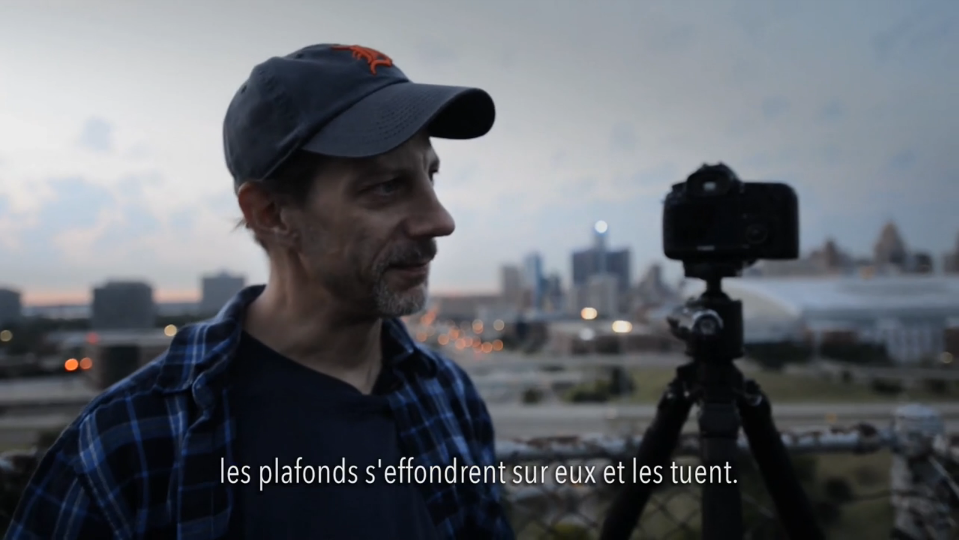
Patrick: One could sense that…especially the scene at the atomic plant, the cooling tower. The way it was filmed with this extreme angles it really looked dangerous, I don’t know.
Mélanie: This one was really dangerous and I didn’t do it. I started climbing and I thought I might get a panic attack if I go any further. But David did it.
Patrick: There is this shot in which you have a view inside the cooling tower from above. That’s amazing.
Mélanie: Yeah, David did it. We don’t show it in the movie but the explorer who went there with us, he didn’t make it to the top, only David did.
Patrick: Yeah, I sensed that the guy was a little bit worried there.
Mélanie: He wasn’t feeling really good in the end. (laughs) But it is completely nuts to do that. There are not many movies about exploration. It is a way of living. For me it is very romantic, it has to do with freedom and independence. For some explorers it is more about being tough or being better than everybody else, it is about completion. I didn’t want to stress the latter. It is only a little bit in the end with the guy from San Francisco. I wanted to give viewers an idea of how to consider your environment in a different way. It is not just about walking the streets and not going into forbidden areas. No, it is about being clever in your daily life, it is about reconsidering and questioning everything that is taken for granted in society. It can be political, it can be about the environment. In all the interviews I have given so far, I admitted, that I didn’t have any political considerations doing the film. It is something from the heart.
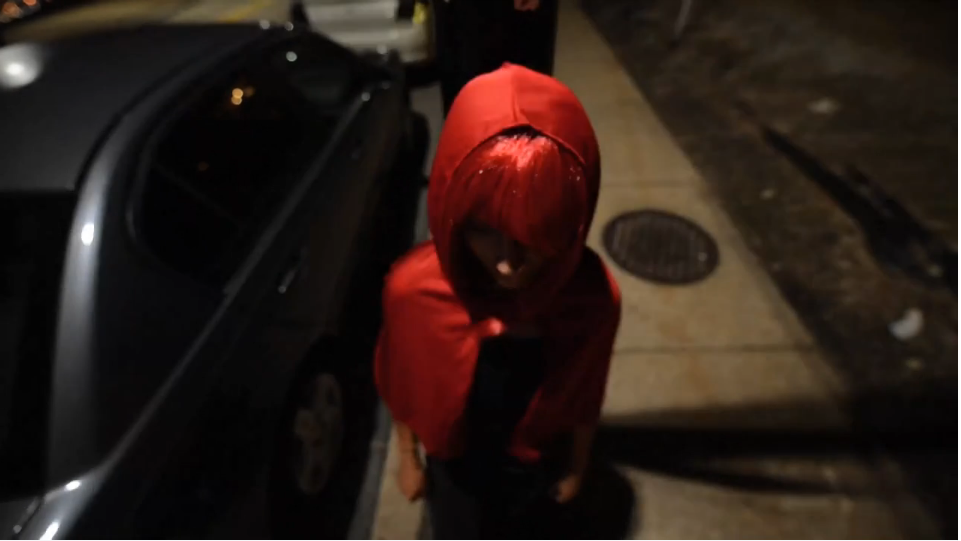
Patrick: One question related to abstraction…those bridges to name it in musical terminology, I am talking about those scenes in which we see you with red hair, if I am not mistaken, and there is this voice-over narration. How do these scenes fit in for you and what did you try to achieve with them? Or was this something which developed during the shooting?
Mélanie: It’s a character called Shinda we invented for the photos in the beginning and during the trip we would have ideas…we would see a light that was very beautiful and we wanted to try something. And we really liked those scenes we did with the smoke and with the light, so we wanted to include them in the movie but we didn’t really know how. But we didn’t have any transitions between the cities. So we just used those scenes. There is really no consideration behind it. We tried to take this character to explain the story about exploration. It was written after we came back. It was very difficult. I rewrote it about 15 times. I tried to explore this Shinda character but it was never really sincere, it was too made-up. So we decided to keep things very lightly, doing a little bit of poetry without any significant role in the movie. It’s more of a breath.
Patrick: Last question: What happens with the film? Will you still have any screenings, any festivals, what is your plan?
Melanie: We have a plan for TV distribution, it will screen 2015 several times on the same channel in France. Our producers are also working on the distribution for other channels. It is very difficult because it hasn’t been sold before the shooting. Probably we will screen at further festivals, will organize more screenings in France and abroad. But I’m the only one who takes care about this right now, so it’s difficult. I am organizing a screening in Brussels at the end of the month and also in Paris. But when it’s your own movie it is very hard to take care about these things. I would feel much more comfortable with promotion if I did it for another film. But this way I cannot stay back enough to know what is good or not good for the movie. I don’t know what you can hope for an independent movie in 2015. You have to be very creative today, inventive, knock at every door. It is the same with funding. When I go to film festivals and see how many documentaries are still coming out every year, I see that it is still very much alive. But unfortunately many people have to produce their films themselves. And as soon as there is money for a film it is shit. It will be too worked over, not personal enough.