
DAVID PERRIN: Die Erinnerung an einem späten Abend vor mehr als zehn Jahren, als ich Der Himmel über Berlin in einem Kino zum ersten Mal sah. Wie die Kamera durch den Himmel über die geteilte Stadt streift, schwenkt und fliegt und danach, als ich zwei Stunden später wieder auf den nächtlichen, leeren Straßen von Downtown Manhattan trete, schien sich der Himmel über New York zu einer Kuppel zu wölben. Und da fiel mir dieses Zitat von Peter Handkes Das Gewicht der Welt ein, das ich gerade im Film wiederhörte, als Teil von Marions innerem Monolog, während sie in einem Nachtklub sanft mit sich selbst tanzt:
„Manchmal ergreift mich ein Wohlgefühl – wie wenn sich im Innern meines Körpers sanft eine Hand schließt.“
Und dann vor wenigen Monaten las ich eine kurze Erzählung von Filmkritiker Peter Nau über Brieselang. Eine kleine, unspektakuläre Ortschaft westlich von Berlin-Spandau, wo jedoch der Himmel darüber auch die Fähigkeit besitzt, die Augen für die Weite zu öffnen:
„Wenn man in Brieslang aus dem Zug steigt, erblickt man, ähnlich wie in den Momenten, da sich vor einem ein weiter Platz auftut, einen ausgedehnten Himmel, wo die Flugzeuge und die Vögel lange sichtbar bleiben.“ – Peter Nau, Brieselang, Lesen und Sehen: Miniaturen zu Büchern und Filmen.
Drei willkürliche Einträge aus dem eigenen Tagebuch:
07.07.21. Als ich das Funken eines vorbeifliegenden Flugzeuges im Nachthimmel über den Bahngleisen des Westbahnhofs erblickte, wurde der bis sonst bilderlosen Tag endlich Tag – und das trotz der späten Stunde. (Rustensteg Brücke, 1150 Wien)
3.10.21. Der fliegende Vogelschwarm im grauen Himmel und unten auf der Straße schreit ein betrunkener Rollstuhlfahrer. (Reithofferplatz, 1150 Wien)
26.11.12 Der Laubblätterwirbel und dahinter die weiße Taube gegen einen graublauen Frühwinterhimmel, von dem man hofft, dass die ersten Schneeflocken des Jahres bald fallen werden. (Markgraf Rüdigerstraße, Wien, 1150)
…wenige Stunden später: und jetzt schneit es tatsächlich! Kleine, winzige Flocken, die so langsam vom nebeldichten Himmel schweben, wie man es nur in einem Traum erlebt hat. (Zuhause aus dem Fenster schauend)
IVANA MILOŠ: Here’s a pretty basic riddle. Skies are omnipresent in cinema: peeking around corners, swerving along dangerous mountain roads, stretching into the distance behind an impressive landscape (John Ford’s beloved Monument Valley). Then there are sunsets depicting endings, sunrises starring as beginnings, any old sky shot playing a stalemate and, of course, the blue beyond depicting time (Ten Skies, indeed). “Look up, something is coming!” cinema screams at us. Or: “Look up, remember you are small,” a carefully written note reads. Or, in the words of yet another classic: “Never look up, just go on about your business, stare straight ahead, the sky be damned—never deign it a single look.” All in all, a very mixed crowd, and yet none of these are what pops straight into my head the moment I think of the sky in cinema. See, there is something about the sky being the sky that doesn’t fit into a frame. No long shot, close-up, or any angle or duration can alter that. Still, we feel for cinema’s ingrained frame because our natural vision is (slightly less, but nonetheless) limited. So, since it is impossible to express the vastness of the sky while keeping it framed, what could be more logical than an already pre-framed sky in a film shot? I can’t claim this is why I think of Frank Borzage’s Man’s Castle when I think of the sky. Nor can I pinpoint why exactly the idea of seeing birds fly past or the stars shine in the night through the roof without any boundaries separating our body from the sky is so appealing and instantly warming to the soul. Maybe it’s something akin to a comet. Something that catches at the inner workings of human nature. Something stuck, but gorgeous, like a match striking fire in the right place at the right moment in time. Nothing about this is necessarily simple, as the film goes to show. But, at the same time, everything about it is, from the look directed upwards to the lack of reply. The sky doesn’t need us, nor do the skies. However, we might find ourselves hard pressed without anything to look at that stretches so ceaselessly into invisibility and against framing. Maybe this is why every shot of a sky is a small meeting with the unseen, and, even if for a single frame, cinema seems to catch the sky looking back.
SEBASTIAN BOBIK: “Only cinema lets you look straight at the sun, and death”. This sentence opens the film La deuxième nuit by Eric Pauwels. From childhood on we know better than to look directly into the sun. We know, that our eyes are too sensitive and that risking a direct look could possibly damage our eyes. Yet or maybe because of this we find it hard to resist. And so we also point our cameras towards the sky and the sun. By now it is not unusual to see the sun directly in cinema. But this wasn’t always the case. In fact it was a rather well known taboo of cinematography. As legend has it the first film to contain shots directly at the sun is Akira Kurosawa’s Rashomon. The film was released in 1950. In one of the most famous sequences of the film, we see a woodcutter walking through the woods. Right as the sequence begins we are immediately looking upwards towards the tree branches and through them we can catch glimpses of the sunlight directly shining into the lens. To make this shot was considered a risk. There was even the fear, that directly filming the sun might cause the film to burn, or the shots to be unusable. This shot proves those fears to have been wrong.

SIMON WIENER: Allan Dwans The Restless Breed ist durchsetzt von Einstellungen des Himmels. Es ist, wie viele andere Western, ein Film des Wartens; die Hauptfigur harrt der Ankunft des Ganoven, um sich an ihm zu rächen. Immer wieder wird der Himmel in dieses Warten hineingeschnitten; «nothing will have taken place except [the] place», schreibt Bill Krohn über den Film, Mallarmé zitierend. Der Himmel konstruiert den Film-Raum ebenso, wie er ihn auflöst. Gegen Ende wird unerbittlich hin- und hergeschnitten, in absurd kurzen Intervallen, zwischen den verschiedenen Protagnisten, alle wie erstarrt, wie gefangen in ihren Bildern und in den beobachtenden Blicken der andern. Der Himmel fungiert dabei als Binde- und Lösemittel, er vereint in sich all diese voneinander abgetrennten Einheiten genauso, wie er sie zerfallen lässt, als flüchtiger Durchbruch, impressionistischer Einwurf, unkontrollierbar, Gegenbild des Rigiden und Konstruierten, das der Filmhandlung zwangsläufig anhaftet.

JAMES WATERS: Here are my impressions of Howard Hawks’ The Big Sky, relayed in the form of three quotations and some screenshots from the film:
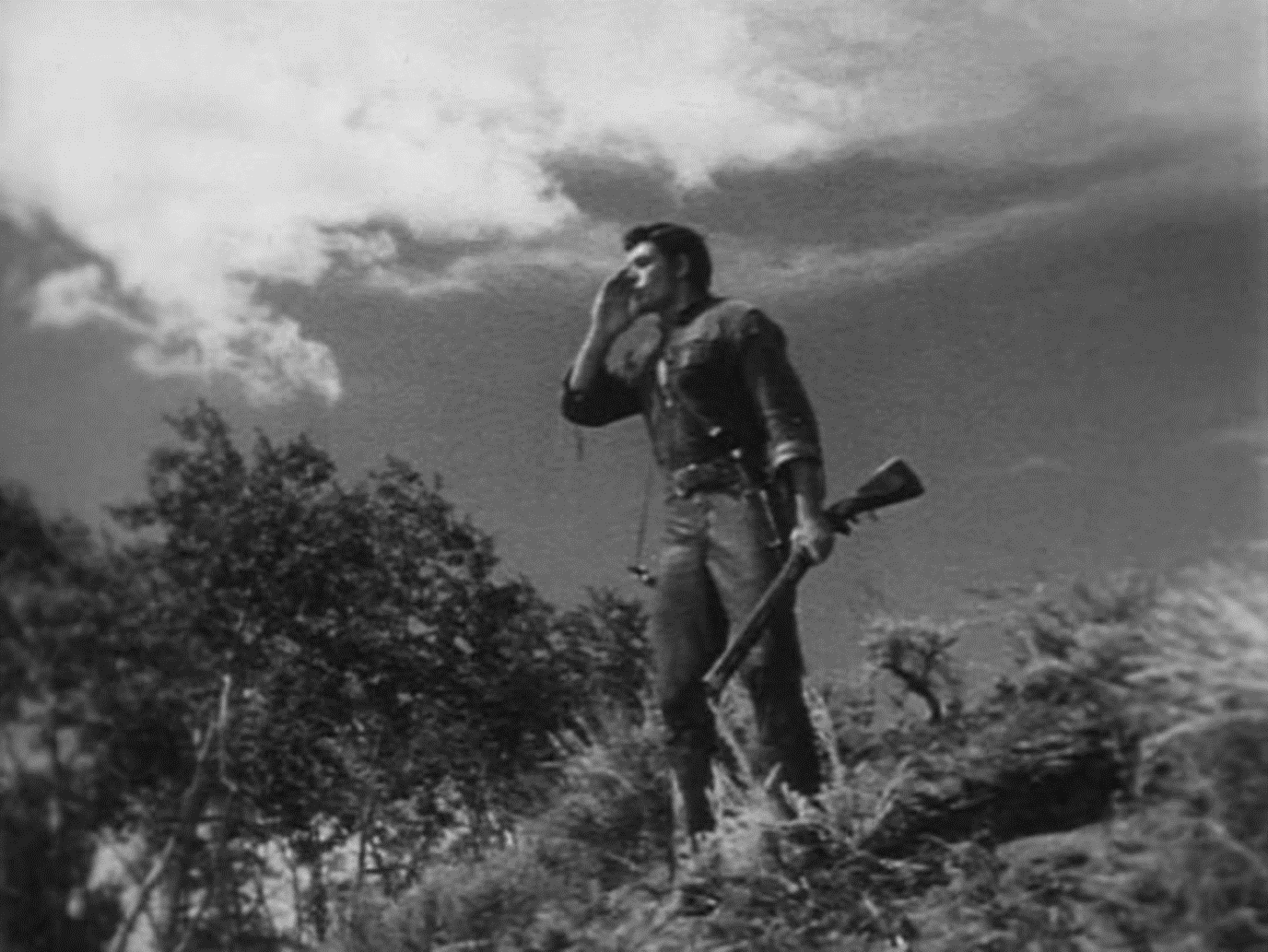
“I go and see films by my colleagues and I don’t see this promise. Even Fincher. Which is a shame as he is the one who is connected to reality. I saw the girl, I saw the motorcycle, I saw the tattoo, it’s all right. It’s a bit too fancy, too chic maybe, but I understand. There’s the iPhone, the sex, the loneliness. It’s three hours because there’s a guy killing girls. Why not just have no-one killing anyone and having a girl with a motorcycle? Can he do this? I think he can. I sent a message to his DP who I know very well. I said, “Avoid the killings. Three hours without the killings. You can have the Bond guy. Let’s set it in Sweden for the yellow light. You can have the editor, the lover, the challenge between young and old, bodies coming together. I understand those fetishes. Let’s avoid every single murder, killing, weapon. That’s the challenge.” I have to deal with this. You can see The Big Sky and analyse it shot by shot. It’s an amazing piece of craft. But you have to do a little bit more. It’s about destiny. It’s about going beyond something. It’s about love. It’s about racism, humiliation, pain. And it’s a long film. It’s big. Big scope! The Big Sky! The Girl With The Dragon Tattoo should be a remake of that film.”
Some Violence is Required: A Conversation with Pedro Costa, Interview conducted by David Jenkins for MUBI, 12/07/13
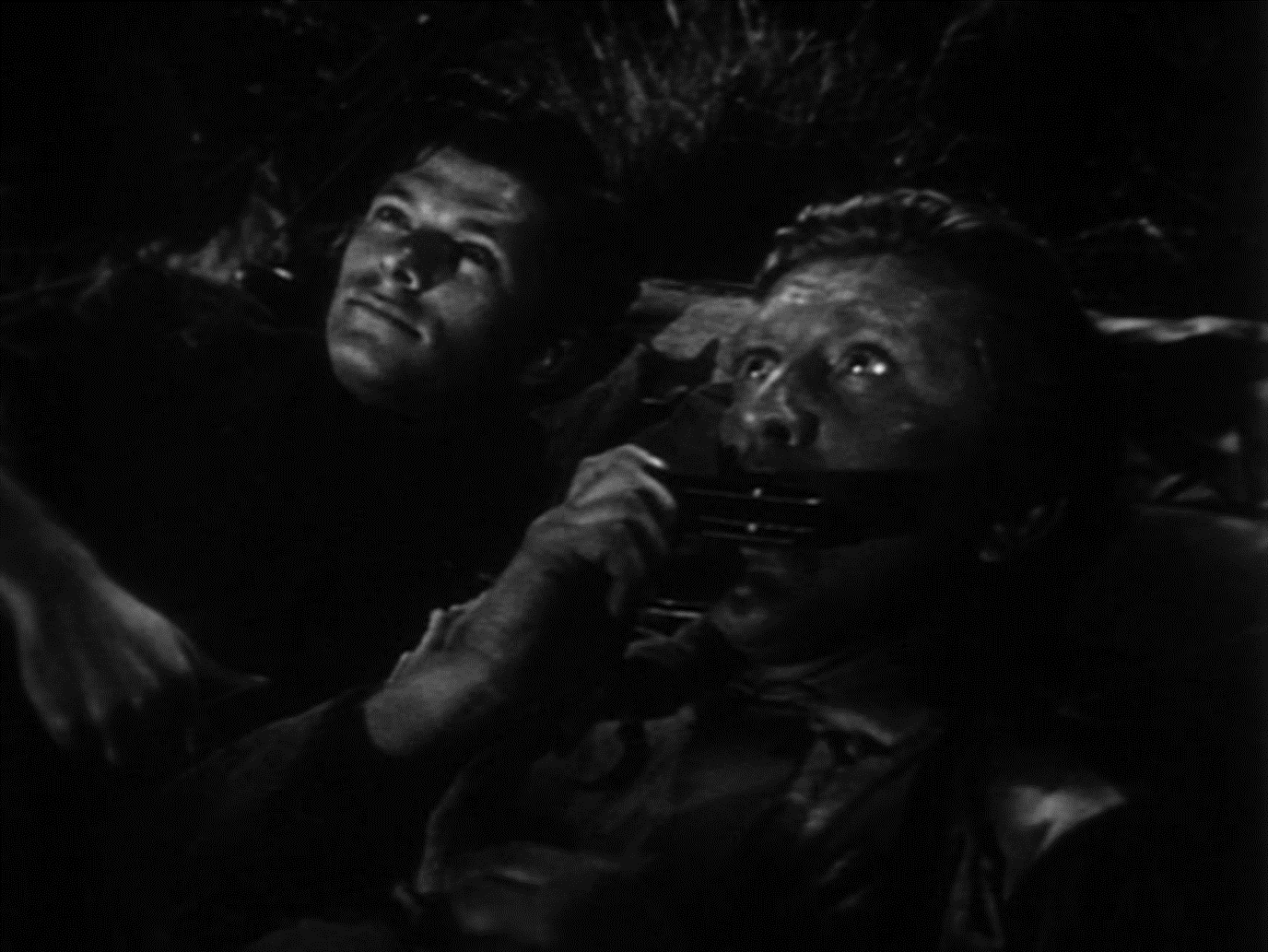
“The sky was so bright and starry that when you looked at it the first question that came into your mind was whether it was really possible that all sorts of bad-tempered and unstable people could live under such a glorious sky.”
Belye Nochi by Fyodor Dostoevsky

“Big Sky looked down on all the people who think they got problems
They get depressed and they hold their heads in their hands and cry
People lift up their hands and they look up to the Big Sky
But the Big Sky is too big to sympathize
Big Sky’s too occupied
Though he would like to try
And he feels bad inside
Big Sky’s too big to cry”
Big Sky, performed by The Kinks, written by Ray Davies
RONNY GÜNL: Von oben auf die Welt herabzublicken, hat im Kino ein Stück weit Tradition. Die Menschen, deren Gesichter eben noch die Breite der Leinwand ausfüllten, werden zu gleichmäßig verteilten Bildpunkten zwischen anderen. Was chaotisch schien, geht in einer seltsamen Ordnung auf, während zugleich die unmittelbaren Probleme winziger Existenzen immer nichtiger werden. Es gäbe größere, wichtigere Zusammenhänge, denen man sich erst mit dem erhabenen Blick bewusst werden könne, so der bekannte Stehsatz von Weltraumrückkehrern.
Offenbar vogelleicht lässt sich über alles hinweggleiten, seien es Bergpanoramen oder Häuserschluchten. Doch um der Schwerkraft zu entfliehen, muss wie beim Aufsteigen einer Ballon-Fahrt, etwas zurückgelassen werden. Man könnte denken, der ohrenbetäubende Kraftakt eines Helikopters oder Flugzeugs löse sich mit den Bildern in Luft auf. Neuerdings sind diese unerreichbaren Perspektiven auch für den kleinen Mann mit ebenso kleinen Gerätschaften in greifbare Nähe geraten. Vom Surren entrückt, schaut man von unten nach oben und fragt sich, wonach sie eigentlich suchen.

ANDREW CHRISTOPHER GREEN:
ANNA BABOS:
(…)
Bis du ankommst von Pilinszky János, Übersetzung von Eva & Roman Czjzek
